New Tech Innovations: Shaping the Future in 2025
1. Generative AI & AI with Memory
Technology marches forward at a breathtaking pace. As we move deeper into 2025, several innovations are no longer just speculative — they are entering mainstream use, disrupting industries, and transforming how people live and work. Below are some of the most exciting tech innovations to watch, what makes them possible, and what challenges they bring.
One of the most profound shifts in recent years has been the rise of generative AI — models that can create text, images, music, even code (e.g. tools like ChatGPT, DALL·E).
Going beyond generative capabilities, newer AI systems incorporate memory, meaning they can remember past user interactions, preferences, and context over long periods. This lets them provide more personalized, proactive assistance, anticipate needs, and reduce repetitive inputs.
Why it matters:
- Improves user experience: Less repeated instruction, more intuitive interfaces.
- Efficiency: Automates more repetitive work, helps with tasks like customer support, scheduling, writing.
- Innovation: New kinds of applications (virtual assistants, personalised education, personalized health monitoring).
Challenges:
- Privacy & security: Where is memory stored? Who controls it? Risk of leak or misuse.
- Bias and fairness: Memory could reinforce stereotypes or misunderstandings.
- Transparency: Users need to know what is remembered, how it’s used, and sometimes options to delete or modify.
2. 5G, 5G‑Advanced & Edge Computing
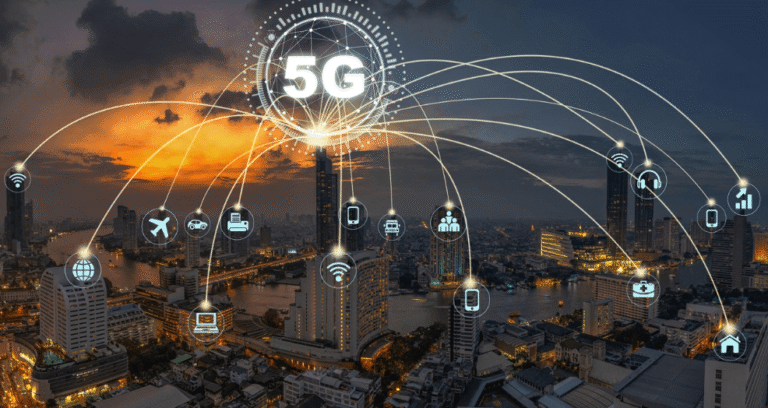
Connectivity is the backbone that enables many other innovations. 5G rollout is continuing globally, and new standards like 5G‑Advanced (sometimes called 5.5G) are on the horizon. These promise higher speeds, lower latency, more efficiency, and better support for many simultaneous connections.
Combined with edge computing — moving computing power closer to where data is generated (e.g. devices, sensors, routers) rather than relying entirely on centralized cloud servers — this allows for real‑time processing, reduced latency and bandwidth usage, and more robust systems in areas where connectivity is limited.
Applications:
- Autonomous vehicles and drones: Decisions must be made rapidly.
- Smart cities: traffic management, surveillance, environmental sensing.
- Healthcare: remote surgery, real‑time patient monitoring.
- AR/VR/XR: immersive experiences require low latency to avoid motion sickness.
Challenges:
- Infrastructure cost: widespread rollout of 5G/5G‑Advanced and edge data centers is expensive.
- Regulatory & spectrum issues: allocating radio spectrum, ensuring safety, managing interference.
- Security: more distributed infrastructure means more attack surfaces.
3. Extended Reality (XR): AR, VR & Spatial Computing
XR combines augmented reality (AR), virtual reality (VR), and mixed reality (MR); spatial computing refers to blending digital and physical environments so digital content lives in 3D space around us.
In 2025 we are seeing lighter weight, more responsive AR/VR devices, improved optics and motion tracking, more content and applications outside gaming and entertainment (education, remote work/training, healthcare).
Examples:
- Virtual training and certification (e.g. for technical skills, surgeries).
- Immersive collaboration tools for remote teams.
- Retail: “try before you buy” AR tools.
- Spatial computing for design, architecture.
Challenges:
- Hardware limitations: battery life, weight, comfort, resolution.
- Content ecosystem: need more software, experiences tailored for XR.
- Accessibility and cost.
4. Autonomous Vehicles, Drones & eVTOLs
Vehicles that drive themselves, or fly vertically (eVTOL: electric Vertical TakeOff and Landing) are moving closer to regular use. Drones are also becoming smarter — AI‑enabled to navigate, avoid obstacles, recognize objects; used for delivery, inspection, surveillance.
eVTOLs promise to change urban transportation, reducing congestion and possibly commute times, especially in cities with significant traffic challenges.
Potential impacts:
- Logistics & delivery: last‑mile delivery by drones, faster transport in difficult terrains.
- Reduced dependence on road infrastructure.
- Potential environmental benefits (if powered by clean energy).
Challenges:
- Regulation & safety: air traffic rules, certification, public acceptance.
- Energy and range: battery limitations, charging infrastructure.
- Cost: both for vehicles and infrastructure.
5. Biotechnology, Gene Editing & Personalized Medicine
Biotech innovations are accelerating. CRISPR and other gene‑editing tools are being used not just for basic research but increasingly for disease treatment, agriculture (creating more resilient or productive crops), and synthetic biology.
Personalised medicine — tailoring treatment to a person’s genetic makeup, lifestyle, environment — is becoming more realistic. Plus, synthetic biology allows creation of new organisms/materials designed for specific tasks.
Impacts:
- Healthcare: more effective treatments, fewer side effects, earlier detection of disease.
- Agriculture: drought‑tolerant, pest‑resistant crops; more efficient food production.
- Environment: biological solutions for pollution, waste.
Challenges:
- Ethical and regulatory concerns: gene editing has serious oversight needs.
- Safety: off‑target effects, unintended consequences.
- Cost and accessibility: ensuring new treatments are available broadly, not only in rich countries.
6. Green Technologies & Sustainable Energy
As climate change pressures mount, innovations in green tech are no longer optional — they’re essential. Key areas include:
- Green hydrogen: hydrogen produced via clean energy sources as a way to decarbonize heavy industries (steel, shipping, aviation) .
- Renewable energy improvements: solar, wind, improved efficiency, better energy storage (batteries, supercapacitors) .
- Sustainable materials: biodegradable electronics, eco‑friendly manufacturing, more efficient waste management.
Why this matters:
- To meet global emissions targets.
- To handle resource constraints.
- To reduce environmental and health impacts of energy production and consumption.
Challenges:
- Infrastructure investment and commercialization.
- Supply chain issues (rare materials, recyclability).
- Policy & regulation (subsidies, standards).
7. Quantum Computing & Post‑Quantum Cryptograph
Quantum computing is still early‑stage, but applying new discoveries in manipulating qubits, error correction, and materials is bringing it closer to usable systems.
Because quantum computers threaten to break many existing cryptographic systems, post‑quantum cryptography (algorithms safe from quantum attacks) is becoming a necessary focus.
Use cases:
- Drug discovery and molecular simulation.
- Optimization problems (logistics, finance).
- Secure communications.
Challenges:
- Hardware scalability: building reliable large qubit systems.
- Noise and error: quantum decoherence.
- Standardization & integration: making quantum‑safe systems practical.
8. Blockchain, Web3, Decentralization
Blockchains initially known for cryptocurrencies are now being used for more diverse applications: supply chain tracking, digital identity, decentralized finance (DeFi), decentralized autonomous organizations (DAOs). Web3 is broader: ideas of decentralizing control of platforms and data.
These can bring transparency, reduce dependency on central parties, and open up new business models.
Challenges:
- Scalability & energy consumption (some blockchains use a lot of power).
- Regulation & trust: governments and users are still figuring out how to regulate.
- Usability: for many people, using DeFi or decentralized systems is technically complex.
How These Innovations Intersect
These innovations don’t exist in isolation — their power comes when they combine. For example:
- AR/VR + 5G + Edge AI = immersive real‑time mixed reality experiences delivered to mobile and wearable devices.
- AI plus biotech leads to predictive diagnostics, or AI helping design new medicines.
- Green tech + autonomous vehicles could change transportation emissions drastically.
- Blockchain + Web3 + AI governance platforms help ensure ethical, transparent deployment of AI.
Real‑World Examples & Early Impact
- Robot vacuums with more intelligence: New vacuums are integrating retractable sensors (like LiDAR towers), mop‑swapping stations, better navigation to clean under furniture or negotiate thresholds.
- Drones/UAVs for hazardous work: In energy sector, drones with thermal and LiDAR sensors help detect faults/leaks in places where human access is dangerous.
- Secure by design networks: As organisations shift to cloud, remote work and multi‑cloud, models like Zero Trust, SASE (Secure Access Service Edge), SSE are being adopted. Also preparing for quantum threats to encryption.
Opportunities & What It Means for Businesses & Society
- Efficiency & Productivity Gains
Automation, smarter tools, real‑time data — all reduce costs, accelerate processes. - New Business Models & Industries
Companies can offer products or services that were not feasible before (e.g. AR‑based retail experiences, drone delivery, AI‑powered diagnostics). - Better Quality of Life
From healthcare (personalised, preventative) to increased mobility, environmental improvements, smarter cities. - Challenges of Disruption
Job displacement, need for new skills, ethical quandaries, privacy, regulatory gaps. - Digital Divide Risk
Regions or populations without access to reliable internet, infrastructure, or sufficient education may be left further behind. - Need for Governance & Policy
To ensure that technology benefits are shared, harms are mitigated.
What to Watch Next
- How regulations evolve: privacy, AI ethics, drone/UAV laws, autonomous vehicle certification.
- Breakthroughs in hardware: battery tech, quantum chips, sensors.
- Adoption curves: how fast XR, autonomous vehicles, biotech treatments become affordable and accessible.
- Cross‑border and global collaboration, especially for green tech and supply chains.
- Public perception: trust in AI, data security, privacy.
Conclusion
We are living through a period of rapid technological transformation. Innovations like generative AI with memory, XR, 5G/edge computing, autonomous systems, biotechnology, blockchain, quantum computing, and green tech are not just buzzwords — they are reshaping industries, economies, and daily life.
The biggest gains will come when multiple technologies combine: AI enabling smarter decision‑making, XR making interaction more immersive, quantum computing solving previously intractable problems, and green technologies helping ensure sustainability.
However, the promise is balanced with significant responsibilities. Policymakers, businesses, and developers must address ethics, privacy, equitable access, and unintended consequences, or risk amplifying existing inequalities and harms.