App Development: Building Digital Solutions for a Mobile-First World
In today’s digital age, smartphones have become the central hub for communication, entertainment, business, and productivity. As mobile usage continues to dominate, app development has become a critical component of how businesses engage with customers, improve services, and drive innovation.
Whether you’re building a consumer-facing mobile app or an internal enterprise tool, understanding the app development process is key to creating a successful digital product.
What Is App Development?
App development is the process of creating software applications that run on mobile devices such as smartphones and tablets. These applications can be developed for various platforms, with iOS and Android being the most common.
App development involves several phases including planning, design, coding, testing, deployment, and ongoing maintenance. Depending on your goals and target audience, you can choose between native apps, cross-platform apps, or web-based mobile apps.
Types of Mobile Apps
- Native Apps
Built specifically for one platform (e.g., Swift for iOS or Kotlin for Android), native apps offer the best performance and user experience but require more time and resources to develop separately for each platform. - Cross-Platform Apps
Using frameworks like Flutter, React Native, or Xamarin, developers can write one codebase that runs on both iOS and Android. This speeds up development and reduces costs. - Progressive Web Apps (PWA)
PWAs are web-based applications that mimic the look and feel of native apps. They run in browsers but can be saved to a mobile home screen, offering offline capabilities and push notifications.
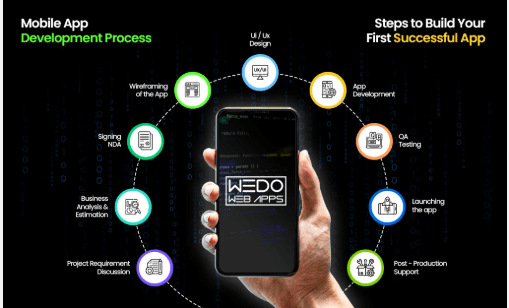
Key Stages in App Development
- Discovery & Planning
Define the purpose of the app, identify your users, and outline your goals. This phase often includes market research, competitor analysis, and defining your minimum viable product (MVP). - UI/UX Design
Designers create user flows, wireframes, and high-fidelity mockups. The goal is to make the app intuitive, visually appealing, and easy to navigate. - Development
Developers write the actual code, integrate APIs, set up databases, and connect backend services. Agile methodologies are often used for iterative progress. - Testing
QA teams conduct functional, performance, and usability testing to identify and fix bugs before launch. - Deployment
Once the app is ready, it’s published to app stores (Apple App Store or Google Play) following platform-specific guidelines. - Maintenance & Updates
Continuous improvement is essential. Collect user feedback, monitor performance, and release regular updates to enhance the app.
Why App Development Matters
- Increased Accessibility: Mobile apps allow businesses to stay connected with users anytime, anywhere.
- Enhanced Customer Engagement: Features like push notifications, in-app chat, and personalized experiences drive user interaction.
- Competitive Advantage: A well-built app can help you stand out in a crowded market.
Conclusion
App development is no longer a luxury—it’s a necessity for businesses looking to thrive in a mobile-first world. Whether you’re building your first app or scaling an existing one, a thoughtful development approach focused on user needs, performance, and scalability is the key to long-term success.