
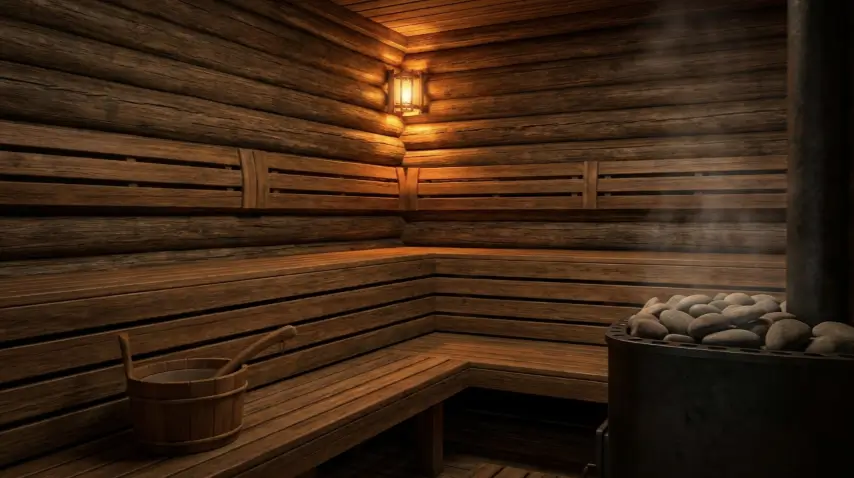
DIY Kit or Pro Install for Your Traditional Sauna?
Most buyers can assemble a precut cedar or spruce sauna kit themselves over a weekend, but the heater’s electrical circuit almost always needs a licensed electrician regardless of who builds the structure. A DIY kit assembly plus professional electrical typically saves $1,000 to $2,500 compared with a fully professional install, while a full pro install runs $1,500 to $3,500 on top of the unit price. Whether that trade-off makes sense depends on tools on hand, available time, and whether the site needs foundation work.
What Does Assembling a Kit Actually Involve?
Precut kits from established manufacturers arrive with numbered tongue-and-groove wall panels, pre-drilled bench supports, and a printed or digital instruction set. Assembly is mostly a matter of standing panels, securing them at the corners, fitting the roof or barrel hoops, and installing the door and bench framing. Two people with basic hand tools, a drill, and a weekend can typically complete a compact two-person cabin. Larger multi-person cabins or barrel saunas with steel hoop tensioning take longer and benefit from a helper who has done it before, but neither requires specialized trade skills.
What Part of the Install Actually Needs a Professional?
The electrical work is the part almost no DIY buyer should skip hiring out. Heaters above roughly 6 kilowatts need a dedicated 240-volt circuit, and running that circuit from the panel, sizing the breaker correctly, and terminating it at the heater is licensed electrician territory in nearly every jurisdiction. Beyond code compliance, most manufacturers explicitly require licensed electrical work to keep the heater warranty valid, so this is not an area where DIY savings are worth the risk. Outdoor installs also sometimes need a foundation or pad poured level, which is a second task worth hiring out unless the site is already flat and stable.
How Much Does a Fully Professional Install Cost?
A full-service install, covering structural assembly, electrical, and any needed foundation work, typically adds $1,500 to $3,500 on top of the unit price. That range swings based on distance from the electrical panel, whether the site needs grading or a pad, and regional labor rates. Buyers who want the shortest path from delivery to first session, with no assembly weekend and no coordination between separate contractors, generally find the premium worth paying.
How Much Does a DIY Kit Actually Save?
The savings from self-assembly mostly come from labor on the structure itself, not the electrical, since nearly every installation still needs a licensed electrician for the circuit regardless of who builds the cabin. Realistic savings from doing the structural assembly yourself run $1,000 to $2,500 versus paying a full-service installer for everything, once you still budget $400 to $900 for electrical work alone. It is real money, but buyers expecting to save the entire installed-cost gap by going full DIY are usually surprised that electrical costs remain regardless.
What Tools and Skills Does a DIY Assembly Actually Require?
A cordless drill, a rubber mallet, a level, and basic hand tools cover most kit assemblies. Reading and following a numbered panel diagram matters more than any specialized skill, and most kits are engineered so panels only fit together one correct way, which limits assembly mistakes. Barrel saunas add one extra step: tensioning the exterior steel hoops evenly around the curved staves, which benefits from a second person and a bit of patience but still does not require professional tools.
Does the Warranty Change Based on Who Installs It?
Often, yes. Many manufacturers require the heater’s electrical work to be performed by a licensed electrician for the heater warranty to remain valid, even if the wood structure was self-assembled without issue. Read the specific warranty language before starting any DIY work, since a voided heater warranty over a $150 electrician oversight is an expensive mistake. Buyers weighing kit options with clearly stated installation requirements can review current listings at https://sweatdecks.com before deciding how much of the project to take on personally.
How Long Does Each Approach Actually Take From Delivery to First Session?
A DIY kit assembly for a compact two-person cabin usually takes one full weekend for structural work, plus a separate scheduling window to get an electrician out for the circuit, which can add another one to three weeks depending on local demand. A full professional install often moves faster end to end, since the installer typically coordinates their own electrical subcontractor and can schedule both pieces of work back to back rather than waiting on separate appointments. Buyers who want the sauna running as soon as possible after delivery generally find the professional route faster overall, even though the actual labor hours are not wildly different between the two paths.
See also: Unlock Creativity 8566778008 and Enhance Your Life
What Mistakes Are Most Common in a First-Time DIY Assembly?
The most frequent DIY error is rushing the leveling step before panels go up, since even a small out-of-level base compounds into visible gaps at the roofline by the time the last panel is set. Overtightening bolts or fasteners on tongue-and-groove joints is another common issue, since wood needs a small amount of room to expand and contract with heat cycling, and joints fastened too tightly can crack over the first few months of use. Reading through the full instruction set once before starting, rather than working section by section without a preview, catches most of these mistakes before they happen.
What Does the Research Say About Sauna Use, Regardless of Installer?
Whether a cabin was self-assembled or professionally installed has no bearing on the underlying health associations tied to regular sauna bathing, which depend on frequency and duration of use rather than who built the structure. A large Finnish cohort study found that men who used a sauna four to seven times a week had lower rates of fatal cardiovascular events and all-cause mortality than men who used one once a week. A related study found sauna frequency together with cardiorespiratory fitness was jointly associated with lower long-term mortality risk. Separate research on blood-based markers found measurable short-term cardiovascular changes among regular sauna users following a session. A safely installed, code-compliant cabin, DIY or professional, is what lets an owner use it consistently enough for any of this to matter.
Frequently Asked Questions
Can a homeowner assemble a traditional sauna kit alone? Most precut kits are designed for two people to assemble over a weekend with basic hand tools.
Does the heater installation require an electrician? In nearly every case, yes, since heaters above 6 kilowatts need a dedicated 240-volt circuit.
How much does professional sauna installation cost? Full professional installation typically adds $1,500 to $3,500 on top of the unit price.
Is a DIY kit actually cheaper once electrical work is included? Usually, but by less than expected, since a licensed electrician is needed either way.
References
- Association between sauna bathing and fatal cardiovascular and all-cause mortality events, JAMA Internal Medicine, 2015
- Joint associations of sauna bathing and cardiorespiratory fitness on cardiovascular and all-cause mortality risk: a long-term prospective cohort study, Annals of Medicine, 2018
- Short-term effects of Finnish sauna bathing on blood-based markers of cardiovascular function in non-naive sauna users, Heart and Vessels, 2018
By Gregory Nash